This field guide is written for clients comparing services and professionals who want a more precise vocabulary for the method. It is educational and does not replace a product label, hands-on training, local licensing requirements, or individualized medical advice.
Sensitive is a starting point, not a diagnosis
People use “sensitive eyes” to describe many experiences: watering during services, seasonal irritation, dry-feeling eyes, skin sensitivity, a previous reaction, or discomfort with a specific material. Those are not interchangeable. A beauty professional should ask what happened, when it happened, how long it lasted, what products were involved, and whether medical care was needed.
An active eye condition, unexplained swelling, broken skin, or ongoing symptoms should not be covered up with a cosmetic appointment. The client should seek guidance from an appropriate medical professional. A lash artist can explain a service and follow product directions, but should not diagnose an allergy or promise that a different technique will prevent one.
| Consideration | What glue-free changes | What still matters |
|---|---|---|
| Placement adhesive | Not used to pin every lash to the shield | Discuss any known adhesive reaction |
| Lifting solutions | Still required | Label directions, isolation, timing, contraindications |
| Patch testing | Not made unnecessary | Follow manufacturer and local guidance |
| Comfort | May remove a disliked placement step | Individual response cannot be guaranteed |
| Aftercare | No special exemption | Follow provider and product guidance |
What “glue-free” actually removes
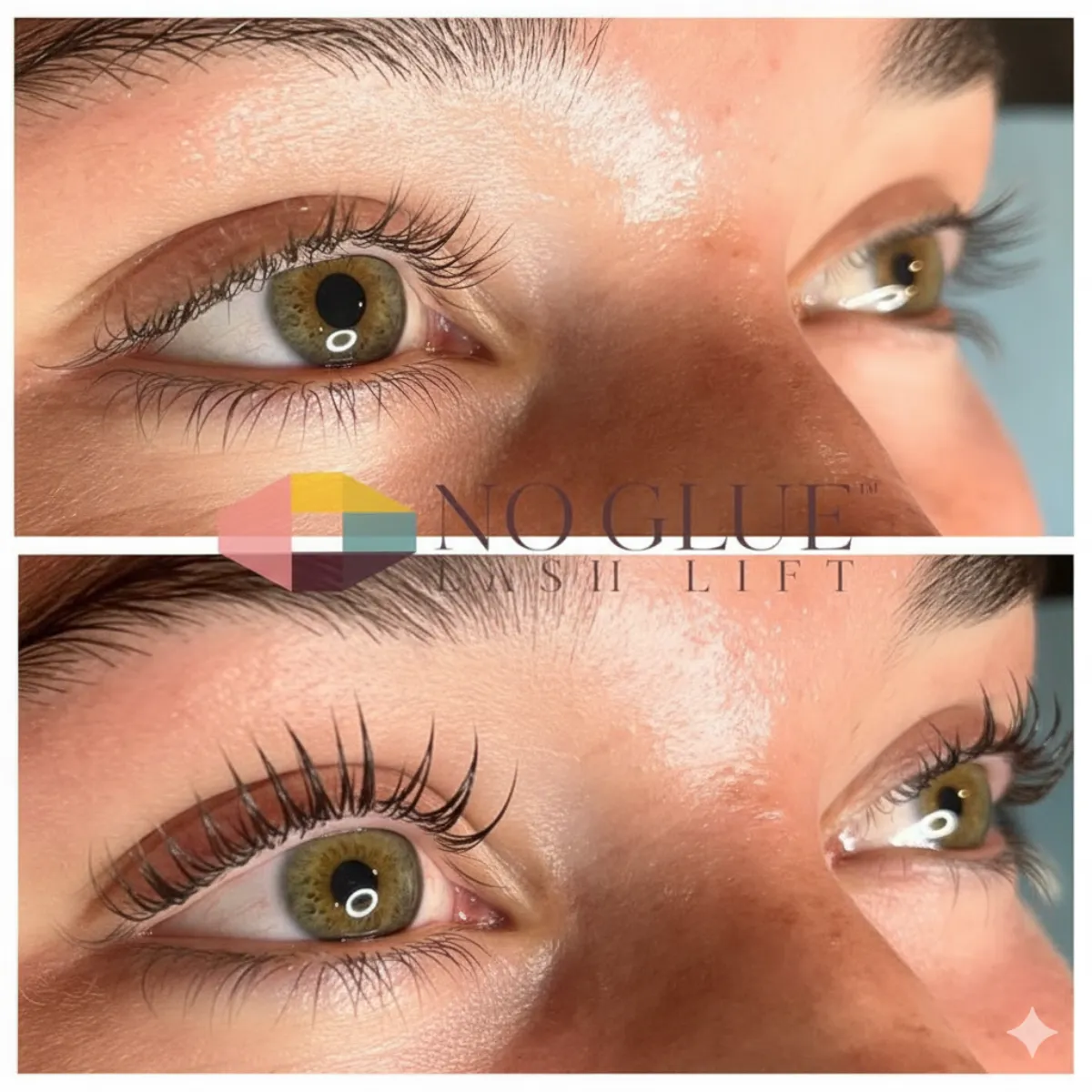
In a traditional lash lift, adhesive is commonly used to secure the natural lashes to a shield. The Korean No Glue Lash Lift® controls placement without using that lash-lifting glue to pin every hair down. For a client whose concern is specifically tied to the placement adhesive or the feel of that stage, removing it may be meaningful.
The service is not product-free. Lifting and neutralizing formulas change and then set the direction of the lash. Depending on the appointment, tint or conditioning products may also be used. Every formula has its own label, contraindications, application boundaries, and emergency guidance. “No glue” must never become shorthand for “no chance of irritation.”
A consultation should change the plan
Before service, share known allergies, previous eye-area reactions, recent procedures, contact-lens needs, and current irritation. Bring the product name from a previous reaction if it is known. The provider should review the planned system and follow its manufacturer’s directions, including any patch-testing instructions and waiting periods. Patch testing can provide information, but it does not guarantee a future service will be reaction-free.
Technique also matters. Clean tools, careful isolation, controlled product placement, and attention to client feedback reduce avoidable exposure. If discomfort develops during the appointment, tell the artist immediately. Continuing in pursuit of a dramatic result is never more important than stopping, removing products as directed, and following the product’s safety guidance.
How to choose a careful provider
Ask direct questions: Which products will be used? How were you trained in the glue-free method? How do you decide timing? What would make you postpone a service? What do you do if a client reports discomfort? A careful provider welcomes these questions and avoids absolute language such as “hypoallergenic for everyone” or “zero risk.”
Olivia Han, a Korea-trained lash and brow artist, pioneered the Korean No Glue Lash Lift® in 2020, first in California and the Bay Area. At Olivia & Lash, the method is offered in Palo Alto and El Dorado Hills. Clients can choose a location using the booking links below and should include relevant sensitivity details during consultation.
Frequently asked questions
Does glue-free mean hypoallergenic?
No. It means lash-lifting adhesive is not used to pin every lash to the shield. Other professional products remain part of the service, and no provider can promise that every client will avoid a reaction.
Should I get a patch test?
Follow the product manufacturer’s directions and applicable local requirements. A patch test may provide useful information but cannot guarantee that a full service will be reaction-free.
Can I have a lash lift while my eyes are irritated?
An active eye issue or unexplained irritation is a reason to postpone the beauty service and seek appropriate medical guidance.
What should I tell my lash artist?
Describe prior reactions, known allergies, recent eye-area procedures, current symptoms, contact-lens needs, and any product names you know. Specific history supports a better consultation.
How long can a glue-free lift last?
A Korean No Glue Lash Lift® can last up to 8 weeks, but the natural lash cycle, starting condition, service plan, and aftercare affect longevity.