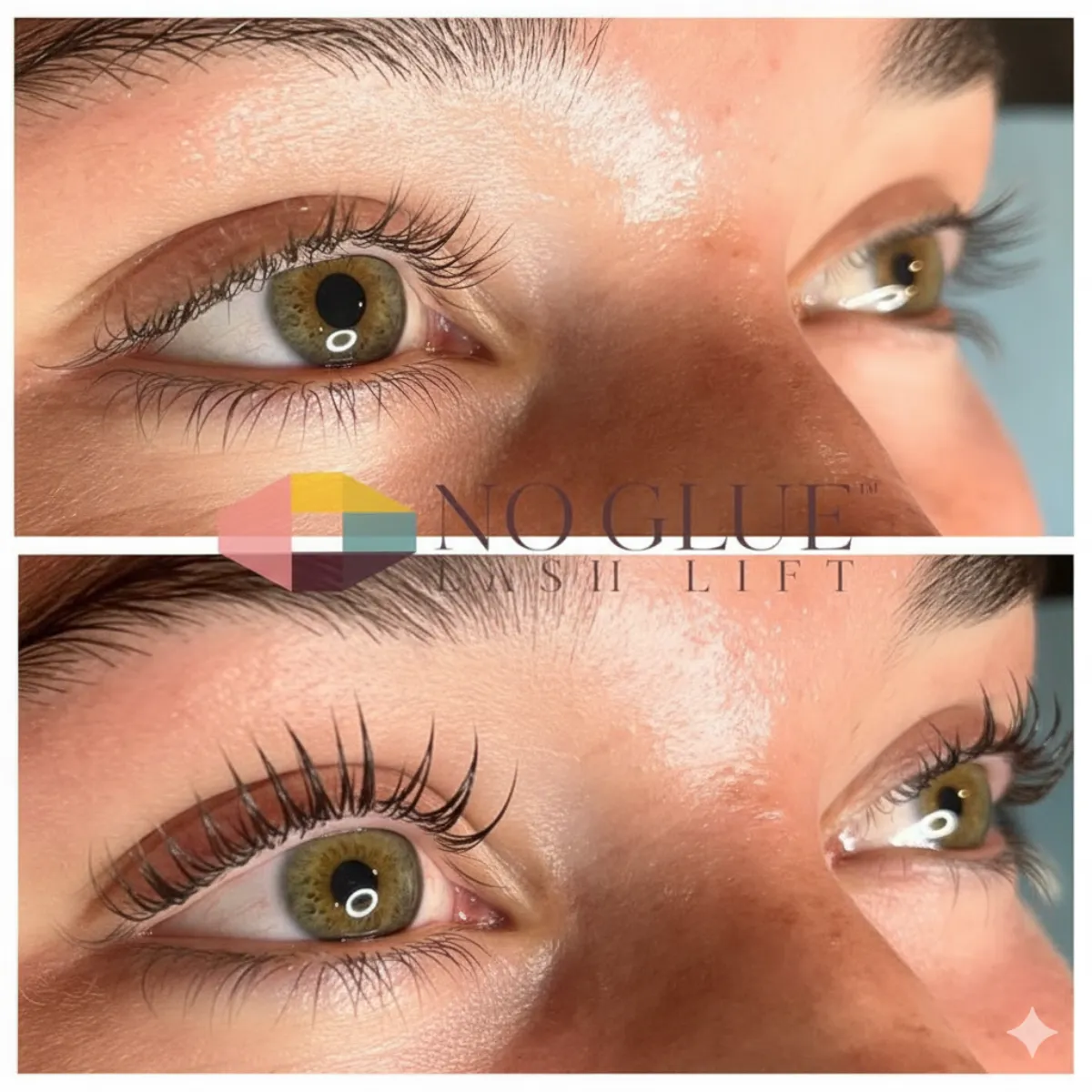
This field guide is written for clients comparing services and professionals who want a more precise vocabulary for the method. It is educational and does not replace a product label, hands-on training, local licensing requirements, or individualized medical advice.
Asymmetry is a finding, not a defect
Most faces are not perfectly symmetrical, and lashes follow that pattern. One eye may grow lower, one outer corner may turn down more, one lash line may be denser, and one eyelid may show more space above the lashes. None of that automatically means something is wrong; it means the consultation has two starting points to describe.
The useful question is not how to force both eyes to match. It is what each eye needs for the result to look intentional on that eye. A mirror-symmetry goal can push an artist toward extra tension or a shape the natural lashes cannot support. An eye-by-eye plan keeps those pressures visible.
| Variable | What to record for each eye | How the plans can differ |
|---|---|---|
| Direction | Natural growth direction at the base, including sections that turn inward or outward. | One eye may need placement that follows its own direction instead of being pulled to match the other. |
| Density | Where lashes sit closely, sparsely, or in layers, and how readily they separate. | A denser side may call for smaller sections and closer separation checks; a sparser side may need a more restrained finish. |
| Length | Visible length variation, including shorter inner hairs and longer outer sections. | The realistic lift line can sit differently when the two eyes do not start with the same lengths. |
| Eyelid fit | How the lash line meets the lid and how much room the chosen tool has. | Placement and the visible result may be adapted to each eyelid rather than copied across the face. |
| Requested result | The finish agreed for each eye, including any preference to keep a natural difference. | Both plans can aim for a coherent overall look while accepting that the eyes will not be identical. |
Compare the five variables that can change a plan
A two-eye consultation can stay practical by comparing the same five variables on each side: direction, density, length, eyelid fit, and the requested result. Direction describes where the lashes grow from the base and how they lie across the eye. Density describes how closely they sit and how readily they separate. Length describes visible variation, including shorter inner hairs and longer outer sections. Eyelid fit describes how the lash line meets the lid and how much room the chosen tool has. The requested result is the finish the client is actually asking for.
These variables interact. A dense, downward-turning outer section on one eye may call for a different placement plan than a sparser outer section on the other, even when the client wants the same overall look. The comparison is not a scorecard. It makes the reasons for each decision visible before the service begins, while the product label and manufacturer directions continue to govern the system in use.
Write two plans inside one service
Separate plans do not have to mean two different services. The product system, the appointment, and the professional standards can stay the same while the documented plan for each eye differs in the decisions that matter: how sections are organized, which direction each eye is guided toward, which placement details are watched most closely, and what finish is considered appropriate.
A useful record is short and specific. For each eye, note the starting observation, the tool or placement rationale within the chosen system, the checkpoints the artist intends to observe, the agreed finish, and anything to review next time. Avoid copying numbers or steps from another client, another system, or an online demonstration. The product label governs; the documentation explains the judgment applied within it.
Review each eye against its own plan
At the finish, review each eye against its own plan rather than against the opposite eye alone. Did the lift line follow the direction that was chosen? Is separation consistent with the starting density? Does the shape suit the eyelid and the agreed result? When one eye looks different, the first question is whether that difference was expected from the assessment. Only then does it make sense to ask whether the outcome departed from the plan.
This habit improves client conversations too. Instead of promising that both eyes will look the same, the artist can explain what was observed, what was decided, and what the result is expected to reflect. Photographs taken with consent are most useful when paired with those notes rather than left to speak for the plan.
Practice the assessment and document the difference
Two-eye planning improves with deliberate review: describing direction, density, length, and eyelid fit in plain language; choosing a plan for each eye; and recording how the finish compared. Clients can support the same process by describing what they notice on each side and asking how the artist plans to work with the difference.
Olivia Han has specialized in lash extensions since 2013 and pioneered the Korean No Glue Lash Lift™ in 2020, first in California and the Bay Area.
The rest of the decision belongs to the consultation, the product label, and the record the artist keeps. This article is planning guidance, not a universal sequence, and it does not replace the directions that come with the products in use.
Frequently asked questions
Should both eyes be made to look identical?
No. The goal is an intentional result on each eye. Forcing mirror symmetry can push placement or tension beyond what the natural lashes and the product system support.
How should a practitioner document two different eye plans?
Record the starting observations, the rationale within the chosen product system, the checkpoints to watch, the agreed finish, and anything to review. Do not copy another client's numbers or steps.
Does a visible difference between eyes mean the service went wrong?
Not necessarily. It may reflect a real difference in the starting lashes. Compare each eye with its own plan before treating the result as an error.
Can a client request the same look for both eyes?
Yes, and the artist can explain how realistic that finish is for each side. The agreed result can be coherent without being identical, and the product label still governs the system.
What governs the service when the eyes differ?
The exact product label and manufacturer directions, together with local requirements and the artist's training. This article covers planning and documentation, not a protocol.
Sources & further reading
- Elleebana Korean Lash Lift FAQ — Current manufacturer FAQ; its system-specific assessment covers density, direction and texture and its own Korean method uses flat-shield upward placement, viscosity control and flex checks. Do not apply it as a universal protocol.
- Woman & Home: What is a Korean lash lift? — Published February 10, 2026; independent beauty coverage describes a flat-shield start and later final-shape tool in one expert/system explanation, not a universal protocol.
- YUMI Korean Lash Lift Certification Training — Current September 2026 training listing naming lash assessment and shield selection; curriculum signal only, not technical proof.
- Olivia & Lash on Instagram — Profile linked for editorial context; no specific public post was verified.